The Blues

Written by Dr. Charles R. Ciorba

Early Blues

The blues originated in America during the late 19thcentury, where its roots were established in the southern United Sates.  Ma Rainey and WC Handy were just a couple of the early pioneers who helped formulate the musical style with which we are now familiar.  Delta blues is one of the earliest representations of this art form.  One of its signature sounds can be identified by the slide guitar technique.  Originating in the Mississippi Delta, this style of blues was popularized by Robert Johnson.  Popular folklore indicates he sold his soul to the devil at a local crossroad for commercial success as a musician.  This is certainly an American myth, but please listen to the musical example below to familiarize yourself with Robert Johnson’s sound.

It is interesting to note the Delta blues inspired many rock musicians such as Eric Clapton (Cream) and Keith Richards (The Rolling Stones).  In terms of copyright and royalties, there has been quite a bit of controversy surrounding their recordings of original blues songs.  For example, the rock group Cream performed and recorded a version of Robert Johnson’s Crossroads, which turned out very popular for the group.   

Electric Blues

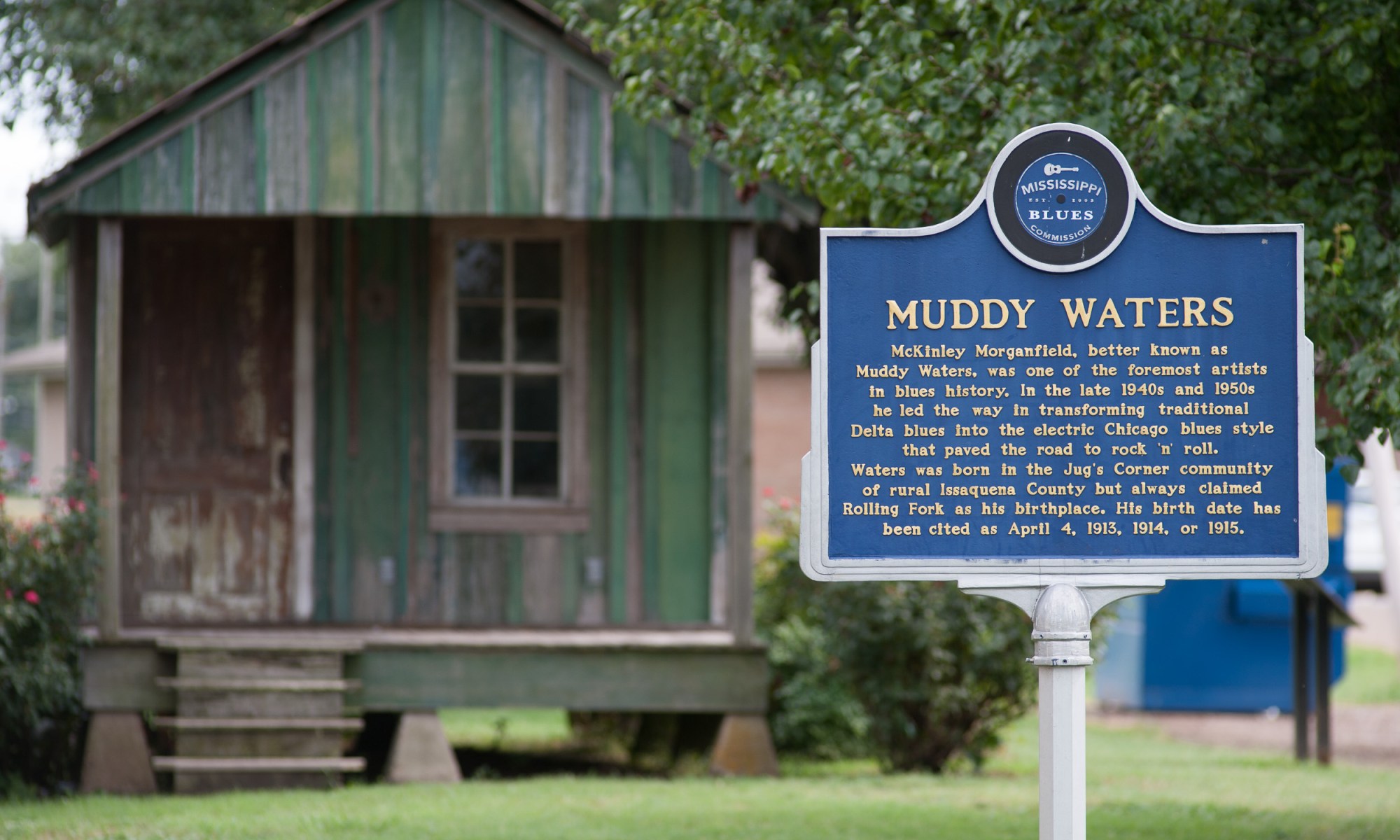
During the great depression of the 1930s, many of the blues musicians from the southern United States moved to Chicago.  It was there a new style of blues music was developed.  While remaining closely aligned with the delta blues, the “Chicago blues” was performed by small combos with an electric sound.  The bass and drums provided the steady pulse while the electric guitar became a solo instrument.  The bars in the south side of the city provided the stage, and one of the great musicians from this era was Muddy Waters.  Muddy moved to Chicago in 1943, where he met Big Bill Broonzy.  He formed a band with Jimmy Rogers and made his first recordings with Chess Records.  His music influenced many musicians, and by the 1970s, he was touring the United Sates and Europe.  

John Lee Hooker is another famous blues musician from this era.  He had a long career that spanned half a century.  As the blues hit a mainstream audience in the second half of the twentieth century, he recorded and performed with many famous musicians.  Early in his career he would record with a microphone near his foot.  This created a very unique rhythmic feel.  Give a listen to the recordings below.  Upon first listen, it is very easy to make the connection between his early sound and that of many famous rock guitarists.

Hey, ‘s The House Rent Boogie.m4a

B.B. King’s blues musical style was much smoother than that of John Lee Hooker.  One of his signature trademarks was the manner in which he would bend the notes on his guitar.  He named his guitar “Lucille.”  The origin of this name is unique.  Early in his career, he was playing a gig in Arkansas.  It was winter, and to keep warm, they would take a container that looked like a metal garbage can, filled it with kerosene, placed it in the middle of the dance floor, and lit it.  One night, two men got into a fight, knocked over the can, and a fire broke out.  B. B. King rushed back into the club to get his guitar and was nearly killed.  Once he learned the two men were fighting over a woman named Lucille, he named all his guitars after her as a reminder to never take that kind of chance with his life.  Below is a recording of B.B. King playing at Sing Sing. You will probably remember me posting this video in my Philosophy class, but the recording is so good, I decided to post it again.  It is a wonderful performance and his connection with the audience is heartfelt.

Here is recording with a young Kenny Rogers introducing B. B. King performing one of his biggest hits. 

Women and the Blues

Many women played an important role in the history of the blues.  Bessie Smith was known as the Empress of the Blues.  She began recording in 1923 and was known as someone who could stand up for themself.  Bessie was a hard drinker and would never back down from a fight.  It has been rumored that she once drove off members of the Klan who tried to protest one of her performances.  Her influence in the field of the blues is undeniable, and Janice Joplin helped to finance a gravestone to be placed on her unmarked grave.  Her vocal presence is remarkable.

Koko Taylor had a huge presence in the contemporary blues scene.  In the 1970s, she recorded nine albums for Alligator Records.  Eight of these albums were nominated for Grammy Awards.  She won a Grammy for Best Traditional Blues Album in 1985.  Personally, she is one of my favorite blues artists.  Here is her take on a Muddy Waters tune.

Blues Rock

It can be argued that the blues helped to influence much of what occurred in the world of rock music. The Rolling Stones, Eric Clapton, Jimi Hendrix, Janice Joplin, Johnny Winter, ZZ Top, Stevie Ray Vaughan… the list can go on and on of famous rock musicians who were influenced by the blues.  Here are a couple of my favorite examples.  The Jimi Hendrix cover of Albert King’s Born Under a Bad Sign is taken from my own personal CD collection.  This is what “jamming” is all about.  The second example is Stevie Ray Vaughan performing a cover of Voodoo Chile by Jimi Hendrix.  Listen to the blues influence demonstrated by this gifted guitarist.  Finally, I’ve included a recording of Janice Joplin at Woodstock.  I find it to be a wonderfully haunting performance.


Jimi Hendrix: Born Under A Bad Sign.m4a

Like all other musical art forms, the blues reflects a rich and colorful history.  It offers a wide creative palate for music educators, as the music can be addressed in vocal and instrumental classrooms.  While we are only lightly touching the surface of the blues in this unit, I hope it can provide some inspiration for all of you.  Let’s end with a little blues inspired rock and roll!

World Beat

Written by Dr. Charles R. Ciorba

World beat involves the fusing of traditional musical styles with contemporary Western musical influences.  Often, the goal is to introduce a particular musical genre to a wider global audience. Normally, it is very well done, but then again, it can sometimes come across as a watered-down attempt to achieve commercial success.  Commercialism was key when world beat was popularized in the 1980s. Popular music artists such as Paul Simon, Peter Gabriel, and David Byrne embraced the style.  International artists such as Ladysmith Black Mambazo and Ali Kahn also helped to popularize world beat.  In addition, you may be familiar with River Dance and The Buena Vista Social Club.  The musical examples below were easily accessible to a mainstream audience.  When combined with the very popular MTV (music television) of the day, these artists (who were already quite popular) achieved huge commercial success with the world beat style. 

The roots of world beat were starting to strengthen as far back as the 1970s. For example, Fela Kuti was a musician and political activist who help to pioneer a style known as Afrobeat. A very charismatic individual, he spoke against the Nigerian military, and his music was often the source of controversy with the Nigerian government. Fortunately, he was quite popular with the people.   Musically speaking, Fela combined funk and jazz with traditional music from Africa.  He recorded with Ginger Baker, who was the drummer for Cream. Sadly, he died of complications related to AIDs in 1997.

While world beat was originally very popular in Africa and Latin America, it has grown into a worldwide phenomenon.  Today, many populations around the world have fused traditional sounds with pop, rock, rap, and hip-hop influences.  One only needs to visit the Radio Garden to get an idea of the popularity created by this music, and it continues to evolve. For example, I believe we have one or two K-pop fans in this class.  I will be the first to admit that my knowledge of K-pop is extremely limited. I have spent some time watching the music videos from South Korea and have come to realize that K-pop has fully adopted Western musical styles.  Their production values are excellent, and their musical abilities rival anything that is currently produced in the United States.  I think I’m becoming a fan!  It reminds me of my time living as a Ph.D. student in Miami.  Latin culture dominated the streets and the media.  It was then I realized the countries south of Miami mirrored the musical styles offered in the United States. There is a great deal of information to consider, and we will delve into a number of topics for the weekly assignment. For now, let’s enjoy the music.

World beat: All it takes is a musician, or group of musicians, to get a bit creative with the music.

American Roots Music (MUSI 660)

Written by Dr. Charles R. Ciorba

American roots music… What is it?  This musical genre involves the combination of different musical forms created by Americans. The music then goes on to become a musical genre that is listened to throughout the world.  When it comes to American music, I’ve always been a fan of jazz. It is a completely American art form that involves a combination of the sacred (gospel) and the profane (blues).  I have always been, and I always will be a fan of jazz.  But this week, we are going to go in a much different direction.  I would like for all of us to explore the music of (but not limited to) the Appalachian region of the United States.  When it comes to this musical style, I am no expert, although I do enjoy bluegrass music for its technical virtuosity.  Bluegrass musicians can really play!  I’ve also been a fan of Johnny Cash and Willie Nelson for many years.  I enjoy their music, and I’ve always had respect for their individualistic nature.  I am also aware that many of you teach in the state of Virginia.  This music is part of the state’s history, and it can be taught as such, if you choose to do so.  Your milage may vary, but when approached correctly, you may find value when introducing this music to your students.    

Note. According to Anderson and Campbell (1996), the Appalachians belong to the oldest mountain range in North America.

The Beginnings

In the seventeenth century, immigrants from England, Scotland, and Wales settled in the Appalachian region.  Many of them were laborers, farmers, and servants.  Mostly illiterate, they passed down the music of their European roots through the aural tradition.  Consider the following traditional musical example from Scotland. The instrumentation, melody, tonality, and lyrics create distinct musical imagery to the listener.  I believe it is a rich an interesting musical style that is easily attributed to a specific part or the world.

Frog Went a Courtin’

Below is an authentic folk song, which originated in the Appalachian region of the United States. It is performed by Almeda Riddle (1898-1986).  She was a folk singer from Arkansas who collected and sang folk songs for most of her life.  I used to play this song for my elementary students, and I would receive a variety of reactions from them.  One young girl said that she tried to follow the lyrics, but would eventually get lost and would regroup at the chorus.  What a keen way for a young person to follow the music!  And don’t discount the intellectual value of this musical style.  If you search ProQuest Dissertations and Theses Global, you will discover plenty of scholarly work devoted to this folk genre.  Please give it a listen, and determine if you can hear a connection between the European and American folk traditions.

Performing this Music Today

This musical history of American folk music is very complex, and it has branched off into many different directions over the years.  With that said, it has also maintained a steady tradition.  I am so happy to find recent examples of young people performing these traditional musical styles.  This video features a group of young people from Alabama performing a traditional American folk song.  They are great singers and great musicians.  Lots of fun music making!   

I would like to feature one more video that combines great examples from both musical worlds.  The Chieftans are an Irish folk group that originally formed 60 years ago.  There is no doubt they helped to popularize Irish folk music around the world.  In 1992, they collaborated with a number of top American country artists to record a collection of traditional American folk songs.  These artists included Willie Nelson, Emmy Lou Harris, and Colin James.  The album won a Grammy Award in 1993 for best contemporary folk album.  I believe I saw them perform one of the songs from the album on a late night talk show, and I immediately bought this CD.  I’ve listened to it often, and on occasion, I have shared the music with my young students.  I think it is a great example that highlights the commonalities between American roots music and the traditional music of Ireland.  The album works!  Please enjoy a recording of a famous American folk song performed by The Chieftans and Ricky Skaggs.

I know I’m going out on a bit of a limb with this week’s learning unit, as I am well aware of the negative stereotypes often associated with this type of American folk music.  As an educator, I believe it is important to examine all musical genres. I am also committed to promoting positive dialogue and developing good will through music. Together, we can continue to become better teachers, better thinkers, and better people.

Teaching Multicultural Music: Thoughts and Experiences (MUSI 660)

Written by Dr. Charles R. Ciorba

This semester, I am teaching an online graduate course on the topic of multicultural perspectives in music education.  Given today’s social and political climate, I’ll start the semester by asking, how should music educators approach the subject of multicultural music in their classroom?  This question involves a complex response, and I thought it best if I opened the course by sharing some of my own thoughts and experiences.

I would like to begin by going back 22 years, when I was attending a state music education conference at the University of Michigan.  At one of the sessions, a music educator from New Mexico presented on the topic of authenticity when teaching multicultural music.  Two points of view were being debated.  On one side, there were those who were committed to true authenticity.  This group advocated for the teaching of music from other cultures in a truly authentic manner.  The other group advocated for the teaching of multicultural music using various approaches.  For example, one teacher discussed combining African folk music with hip hop rhythms.  This group claimed the music they taught was authentic because they were creating it on the spot.  In other words, it was authentic because they were doing it.  It was a lively discussion.  Philosophically, I quickly fell into the second group.  In fact, it was a pivotal moment in my history with multicultural music.  As a music teacher, I would fuse many different types of musical styles in my classroom.  Contemporary rhythms with traditional melodies, rap and poetry with traditional hand drumming; you name it, I did it.  It was all about the music, and I addressed each topic with respect and enthusiasm.  In response, the students (and the rest of the school community) responded positively.  The post-modern mind set of “anything goes” was in full force.  Of course, I was also sensitive to the need for respecting the rules and customs of the Native American community.  With proper awareness, I would teach the music representing this culture in a truly authentic manner.  It was an exciting time to teach music in Ann Arbor, Michigan. 

While living and teaching in Ann Arbor, I would regularly commute to northern Ohio (approximately 70 miles one way) while I earned my Master’s Degree in Music Education at Bowling Green State University (BGSU).  It was during this time I took my first online course, which was taught by Dr. Victor Fung.  The title of the course was Multicultural Music.  This too was a pivotal moment, as I became familiar with the term multicultural music.  Before that, the popular term was world music.  In fact, you could walk into many record/CD stores in the 1980s/1990s and see a section devoted to world music.  Dr. Fung disagreed with this term by stating ALL music is world music, and that term should not be applied to music that represents a culture that is different from our own.  Rather, he believed the term multicultural music should be used.  I also took another class that was taught by one of Bowling Green’s musicology faculty.  I quickly discovered that BGSU was one of the only universities in the United States that owned a full gamelan, which consists of instruments from Bali and Java, Indonesia.  I attended one of the gamelan concerts in the fall of 2002 and was completely impressed with the authenticity of the performance.     

Let’s now jump forward 12 years.  At this point, I’m an Associate Professor at the University of Oklahoma.  I’m no longer teaching multicultural music in the K-12 environment, but I did experience another pivotal moment that further developed my understanding of multicultural music.  The Norman Music festival is an annual event, where many bands from all over the region perform as part of a huge music festival.  During this time, Mary Fallin was the Governor of Oklahoma.  I won’t comment on her administration, but given the part of the country in which the state of Oklahoma is located, your political assumptions would probably be correct.  The governor has a daughter named Christina, who sang with a band called Pink Pony.  One summer, Pink Pony was given a headline spot at the Norman Music Festival.  Please click on the link below to find out what happened.

One of my graduate students knew some people who attended this performance.  Of course, protesters clashed with fans of the group, and it was quite a mess.  Christina Fallin’s actions were calculated, deliberate, and political. 

Within this personal story of mine, I presented several examples of people teaching and performing music from a multicultural perspective.  The first, in which I (as a music educator) embraced multicultural music in a variety of  ways.  The last, in which a state governor’s daughter used music to make a controversial political statement.  In both circumstances, cultural appropriation was being practiced, but the contexts and intentions were completely different. 

Given my professional history, I now realize it is more than just teaching the music.  It is also important to be well informed and culturally sensitive when addressing multicultural perspectives.  We should be encouraged to delve into the historical and emotionally sensitive elements behind each culture.  By doing so, we can begin to address the realities of cultural appropriation and social bias in a positive fashion.  I look forward to a fun and rewarding semester.